All newsTechnical
Elastic and plastic deformation in uprights: why the difference matters
An upright that takes a knock can either spring back or be damaged for good. Telling the two apart is the basis of useful monitoring.
Every day, in a warehouse with forklift traffic, racking uprights take knocks. Most are light; some aren't. The important question isn't only whether there was an impact, but what it left behind.
Two responses of steel
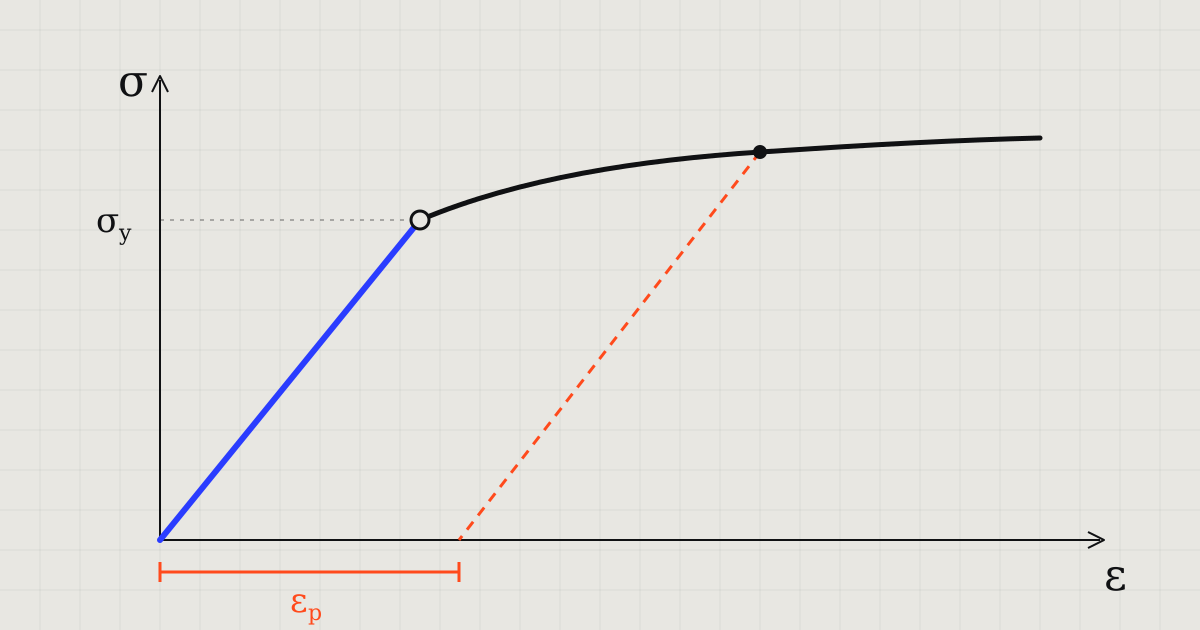
When a load is applied to a steel member, it deforms. As long as the stress stays below the yield strength, the deformation is reversible: once the load is removed, the material returns to its original shape. That is elastic deformation.
If the stress exceeds that limit, the steel enters the plastic range. When the load is removed, part of the deformation remains. The upright is no longer the same: it may be dented, bowed or out of plumb, and its load capacity may be reduced.
Why it matters in a warehouse
- An elastic knock is information: it shows where impacts concentrate and helps spot risk areas.
- A plastic knock is damage: the upright must be inspected and, depending on its condition, repaired or replaced.
Treating both the same leads to two mistakes: constant alarms for harmless knocks, or permanent damage that nobody sees until the next inspection.
How a sensor tells them apart
A sensor that measures the upright's deformation continuously sees the whole event. After an elastic impact, the signal returns to its baseline. After a plastic one, it stays offset: there is a residual deformation. That difference, measured rather than estimated, separates logging events from raising a damage alert.
And inspections
EN 15635 sets out periodic inspection of racking by competent people, as well as the immediate reporting of any damage. Continuous monitoring doesn't replace those inspections: it complements them with data on what happens in between.
At XRack we measure that difference with flexible-electronics sensors bonded to the uprights. More on the product page.